
The Short Answer
Small businesses can save 40% on average in operational costs over three years by choosing cloud security over on-premises solutions. This guide compares the cost and risk of both models for small businesses with 10–50 employees, highlighting key considerations like upfront expenses, maintenance, scalability, and compliance needs.
What Is On-Premises Security?
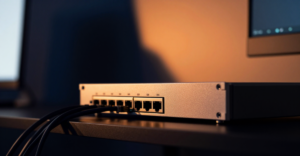
On-premises security means physical security infrastructure installed at your business location — firewalls, unified threat management (UTM) appliances, intrusion detection systems, local VPN servers, and on-site servers running security software.Still Choosing a Data Protection Approach?
We shortlist 3 vetted Data Protection providers tailored to your size and priorities — delivered in 24 hours. No obligation, no reseller markup.
Talk to Expert →- Next-generation firewall (NGFW) — the primary perimeter defense, filtering traffic entering and leaving your network
- UTM appliance — an all-in-one box combining firewall, VPN, antivirus, web filtering, and intrusion prevention
- On-premises servers — domain controllers, file servers, potentially an on-site backup server
- Local endpoint agents — antivirus and EDR software installed and managed from a local management console
- Full control over your security infrastructure and configuration
- Data never leaves your physical premises (important for some compliance frameworks)
- No dependency on internet connectivity for internal network security
- One-time hardware cost (though hardware must be replaced every 3–5 years)
- Can be customized deeply for specific network architectures
- High upfront capital cost ($3,000–15,000+ for SMB-scale infrastructure)
- Requires IT expertise to configure, patch, and maintain properly
- Hardware becomes outdated — firmware updates are critical and often delayed
- Provides no protection for remote workers connecting from outside the office
- On-premises hardware cannot scale instantly as your business grows
- Monitoring gap: after-hours security events often go undetected until Monday morning
What Is Cloud Security?
Cloud security replaces on-premises hardware with software-as-a-service (SaaS) platforms hosted and maintained by security vendors. Instead of a firewall appliance in your office, you route traffic through a cloud-hosted security service. Instead of a local management console, you access a dashboard from anywhere. The modern cloud security stack for an SMB typically includes:- Cloud firewall / SASE (Secure Access Service Edge) — routes all internet traffic through a cloud security platform that inspects it before it reaches your devices, regardless of where employees are working
- Cloud Security Posture Management (CSPM) — monitors your cloud applications (Microsoft 365, Google Workspace, Salesforce) for misconfiguration and unauthorized access
- Cloud-based email security — integrated with your email platform, scanning inbound and outbound messages
- Cloud-hosted EDR — endpoint agents on devices that report to a cloud management console, with 24/7 monitoring often included
- No upfront hardware investment — operational expense rather than capital expense
- Automatic updates — vendor responsibility to patch and maintain
- Works identically for remote, hybrid, and in-office employees
- 24/7 monitoring included with many managed cloud security services
- Scalable instantly — add users without new hardware
- Vendor expertise and threat intelligence at scale (millions of events processed daily inform your protection)
- Monthly recurring cost adds up over time
- Requires reliable internet connectivity — if your connection is down, cloud-dependent tools are affected
- Less control over configuration than on-premises hardware
- Data sovereignty: some data passes through vendor infrastructure (matters for specific compliance frameworks)
- Vendor dependency — if the vendor has an outage, your security posture is affected
Head-to-Head Cost Comparison
The numbers tell most of the story. Here’s a realistic 3-year total cost comparison for a 15-person business:Small businesses using cloud security save 40% on average in operational costs compared to on-premises solutions, according to a 2026 industry survey.
| Component | Upfront | Monthly | 3-Year Total |
|---|---|---|---|
| UTM/NGFW appliance | $2,500–4,000 | $150–300 (support) | $8,000–14,800 |
| VPN server setup | $500–1,500 | $50–100 (licensing) | $2,300–5,100 |
| On-site server (if needed) | $2,000–5,000 | $100–200 (maintenance) | $5,600–12,200 |
| Local endpoint management | $0 | $75–150 (15 users) | $2,700–5,400 |
| IT labor to manage | $0 | $300–600 (estimated) | $10,800–21,600 |
| Total | $5,000–10,500 | $675–1,350 | $29,400–59,100 |
| Component | Monthly Cost | 3-Year Total |
|---|---|---|
| SASE / cloud firewall | $150–300 (15 users at $10–20/user) | $5,400–10,800 |
| Email security (SEG) | $90–150 (15 users at $6–10/user) | $3,240–5,400 |
| Cloud CSPM + identity | $75–150 | $2,700–5,400 |
| Cloud-hosted EDR | $120–225 (15 users at $8–15/user) | $4,320–8,100 |
| Total | $435–825/month | $15,660–29,700 |
When On-Premises Security Still Makes Sense
Cloud isn’t always the right answer. These scenarios favor keeping security infrastructure on-site: Data residency requirements. Some regulated industries (certain healthcare, financial services, and government contractors) have specific requirements about where data can be processed and stored. If your compliance framework prohibits data from passing through third-party infrastructure, on-premises security is necessary for those workloads. Existing infrastructure investment. If you purchased a three-year-old NGFW appliance last year and it’s running current firmware, replacing it with a cloud subscription immediately doesn’t make financial sense. Plan a cloud migration at the natural hardware refresh cycle. Dedicated IT security staff. If you have a security engineer on staff who actively manages and monitors your on-premises infrastructure, you’re getting the value of that investment. The on-premises disadvantages are largely about unmanaged hardware — a well-managed on-prem stack is genuinely strong. Highly sensitive isolated environments. Some businesses operate systems that should be air-gapped from internet connectivity for security reasons. Manufacturing controls, research systems, and certain financial systems may require physical isolation that cloud architecture cannot provide.The Hybrid Approach
Most SMBs landing somewhere between “all cloud” and “all on-premises” benefit from a hybrid model:- Cloud security for all employee-facing applications, email, and internet traffic
- On-premises protection for any servers that must remain on-site (POS systems, production databases, specialized equipment)
- SASE or SD-WAN to connect office locations and remote workers to a unified security policy
The essentials
- On-premises security requires $5,000–10,500 upfront plus $675–1,350/month ongoing for a 15-person business, including IT labor
- Cloud security equivalent costs $435–825/month with no upfront hardware investment
- Cloud security saves most SMBs 40–60% over three years compared to on-premises infrastructure
- Cloud security provides equal protection for remote and in-office employees without additional configuration
- On-premises security remains appropriate for businesses with data residency requirements, existing infrastructure, or dedicated IT security staff
- Most businesses with under 50 employees and no in-house security team should prioritize cloud-first security architecture
Questions answered
Is cloud security safer than on-premises security for small businesses?
What does cloud security actually cost for a small business?
Can I use both cloud and on-premises security at the same time?
What is SASE and do small businesses need it?
How do I know if my current on-premises security is actually protecting me?
Does on-premises security work for remote employees?
Recommended Data Protection Vendors
DefendMyBusiness partners with a curated network of 400+ vetted providers. Four currently active in our ecosystem for data protection:Vodafone Business
Vodafone Business serves over 4.8 million organizations in over 190+ countries. As part of the broader group, Vodafone Business shares the extensive reach and capabilities of Vodafone, a leading Europ
Unisys
Unisys is a global technology solutions company that powers breakthroughs for the world’s leading organizations. Our solutions & digital workplace; cloud, applications & infrastructure; enterprise
Lunavi
As a leading managed service provider and consulting firm, Lunavi helps customers advance their digital transformation goals by building modern technology solutions, operating efficient and dependable
Windstream Enterprise
In the spirit of our WE will Commitment, Windstream Enterprise is dedicated to creating a selling experience for our channel partners that’s unrivaled in the industry. Leverage our WE Connect Partner
Unsure which fits your business? We’ll match you with three in 24 hours, no obligation.
Keep going
Book a free 20-minute call
We will map out your options and pull three matched data protection providers from our 400+ vendor network. No obligation, no newsletter drip — one call, clear direction. Book consultation →Cloud or on-prem — not sure which is right for you?
Defend My Business helps SMBs cut through the marketing and choose the right security model for their environment, budget, and compliance needs — then get it set up and managed. Through our 400+ vendor network we can often secure better pricing and terms than buying direct, and we stay vendor-neutral, so the recommendation fits you, not a sales quota. Want a second opinion? Pair this with our managed cloud security or talk it through with an advisor. Cloud security support is also covered on our local cybersecurity pages for Dallas and Cincinnati.
Book a free call with a DMB advisor →