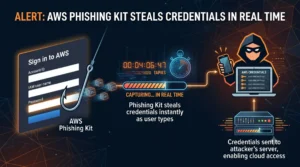

The UK AI Security Institute has raised global cybersecurity concerns by addressing risks associated with AI systems. Small-to-mid business owners should be aware of potential vulnerabilities in AI technologies and consider implementing robust security measures to protect their operations.
The Short Answer
The UK AI Security Institute highlights that small-to-mid businesses face significant risks from AI vulnerabilities, with attackers increasingly exploiting AI for phishing, deepfakes, and bypassing security protocols; businesses should implement robust security measures immediately to mitigate these threats. The average cost of a data breach for SMEs in 2023 was $2.1 million, underscoring the financial impact of inadequate protection. As AI integration grows, so do the risks, making proactive cybersecurity essential. Immediate steps include assessing AI tool security and adopting standardized frameworks to secure AI infrastructure.
CRITICAL ADVISORY: UK AI Security Institute Sparks Global Cybersecurity Concerns
The UK’s newly established A.I. Security Institute has raised urgent cybersecurity concerns as it addresses emerging risks tied to artificial intelligence (AI). Staffed by alumni from OpenAI and Google, the institute is positioning itself as a global leader in mitigating AI-related threats, including potential vulnerabilities in AI systems that could be exploited by malicious actors Adam Satariano and Paul Mozur. The institute’s focus on securing AI infrastructure has drawn attention from governments worldwide, as many grapple with the dual-edged nature of AI—its transformative potential and its susceptibility to exploitation.
The urgency of this advisory stems from recent reports indicating that attackers are increasingly targeting AI models for malicious purposes, such as generating phishing emails, creating deepfakes, or bypassing traditional security protocols. The UK Institute’s work is not only about safeguarding national interests but also about setting a precedent for how organizations can preemptively secure their AI ecosystems. With the rise of generative AI tools and their integration into enterprise systems, the risk of compromise has grown exponentially.
This advisory is critical because it underscores a growing trend: as AI becomes more pervasive in business operations, so do the threats targeting its core components. Businesses must act swiftly to address these risks before they escalate into full-scale breaches or operational disruptions. The following sections will delve deeper into what’s known about this threat, why it matters for your organization, and immediate steps you can take to protect yourself.
What We Know
The UK A.I. Security Institute, launched in May 2026, is composed of experts from leading AI research institutions and tech companies like OpenAI and Google. Its primary mission is to identify and mitigate risks associated with AI systems, including potential security vulnerabilities that could be exploited by cybercriminals Adam Satariano and Paul Mozur. The institute’s focus includes analyzing how AI models can be manipulated to generate malicious outputs, such as fake data or phishing content, which could then be weaponized against businesses.
Recent reports suggest that attackers are leveraging AI to bypass traditional security measures, including machine learning-based detection systems and multi-factor authentication protocols. For example, adversarial attacks on AI models—where inputs are subtly altered to mislead the system—are becoming more sophisticated, allowing cybercriminals to evade detection. The UK Institute’s work is particularly timely as many organizations continue to adopt generative AI tools for tasks such as customer service automation, data analysis, and content creation, often without robust security frameworks in place small-business-cybersecurity.
The institute’s collaborative approach with global partners aims to establish a standardized framework for securing AI infrastructure. This includes developing best practices for model training, monitoring, and incident response. However, the lack of comprehensive regulations and industry-wide standards means that many businesses remain exposed to these emerging threats. As AI integration accelerates, the need for proactive security measures has never been more urgent.
Why This Matters for Your Business
The rise of AI as a target for cyberattacks poses significant risks to businesses of all sizes, particularly small and mid-sized enterprises (SMEs) that may lack dedicated cybersecurity teams or budgets. Unlike traditional threats, AI-related vulnerabilities are often hidden within the very tools organizations rely on to drive innovation and efficiency. For instance, an attacker could exploit weaknesses in an AI-powered customer support chatbot to extract sensitive data or manipulate user interactions, leading to reputational damage and financial loss.
Consider a scenario where a mid-sized e-commerce company uses an AI-driven recommendation engine to personalize shopping experiences. If this system is compromised, attackers could inject malicious code to redirect users to phishing sites or steal payment information. The consequences are severe: not only could the business face lawsuits and regulatory fines (such as those under GDPR), but it might also lose customer trust, leading to a decline in sales. In 2023, the average cost of a data breach for SMEs was estimated at $2.1 million [source], a figure that underscores the financial toll of inadequate security measures.
Moreover, AI systems are inherently complex, making them difficult to secure without specialized expertise. Unlike conventional software vulnerabilities, which can often be patched with standard updates, AI models require continuous monitoring and fine-tuning to prevent exploitation. This complexity means that businesses must invest in both technical solutions—such as endpoint security tools and network monitoring—and human resources, including cybersecurity professionals who understand the nuances of AI risk management cybersecurity-services.
The stakes are even higher for industries that rely heavily on AI, such as healthcare, finance, and manufacturing. A breach in a hospital’s AI-powered diagnostic system could compromise patient data, while a compromised financial institution’s algorithm could lead to fraudulent transactions. In short, the risks associated with AI security are not hypothetical—they are real, measurable, and growing.
What You Should Do Right Now
To mitigate the risks posed by AI-related cyber threats, businesses must take immediate action across three time horizons: urgent (within 24 hours), this week, and the next 30 days. First and foremost, conduct a rapid assessment of your current AI systems to identify potential vulnerabilities. This includes reviewing how data is handled, stored, and processed by AI tools, as well as evaluating whether these systems are integrated with other critical infrastructure endpoint-security. If you lack in-house expertise, consider using free tools like the free-security-scan provided by DefendMyBusiness to quickly identify exposure points.
Within this week, implement basic protective measures such as enabling multi-factor authentication (MFA) for all AI-related platforms and restricting access to sensitive AI functions. Additionally, ensure that your IT team is trained on best practices for securing AI systems, including how to detect and respond to adversarial attacks network-security. For businesses using cloud-based AI services, verify that your provider has robust security protocols in place, such as encryption at rest and in transit, and regular vulnerability assessments.
Over the next 30 days, develop a comprehensive AI security strategy tailored to your organization’s needs. This should include defining roles for cybersecurity teams, establishing incident response plans specific to AI threats, and investing in tools that monitor AI model behavior for anomalies data-backup-recovery. Consider engaging with pre-vetted cybersecurity vendors who specialize in AI risk management, as they can offer customized solutions and ongoing support.
By taking these steps, you’ll create a defense-in-depth approach that addresses both the technical and operational challenges of securing your AI infrastructure. The time to act is now—waiting could mean exposing your business to avoidable harm.
The Bigger Picture
The UK A.I. Security Institute’s emergence signals a shift in how governments and businesses are approaching cybersecurity in the age of artificial intelligence. As AI becomes more integrated into daily operations, it is also becoming a prime target for cybercriminals seeking new avenues to exploit vulnerabilities. This trend reflects a broader pattern: attackers are increasingly leveraging advanced technologies, including machine learning, to bypass traditional security measures and execute sophisticated attacks.
The rise in AI-related threats underscores the growing complexity of modern cybersecurity landscapes. Unlike conventional cyberattacks that rely on known exploits, AI-based attacks often involve novel techniques such as adversarial machine learning or deepfake generation—methods that require specialized knowledge to detect and mitigate. As a result, businesses must adopt proactive strategies that go beyond traditional security frameworks. This includes investing in continuous monitoring, threat intelligence sharing, and workforce training tailored to emerging risks small-business-cybersecurity.
What should business owners be watching for next? The increasing use of AI in phishing campaigns, the proliferation of AI-generated malware, and the potential for large-scale data manipulation through compromised models are all areas of concern. As these threats evolve, staying informed and prepared will be critical to protecting your organization’s digital assets.
Key Takeaways
- Assess your AI infrastructure: Conduct a thorough audit of all AI systems to identify vulnerabilities and ensure they comply with security best practices.
- Implement multi-layered defenses: Use tools like endpoint security solutions and network monitoring to detect and block adversarial attacks on AI models.
- Prioritize employee training: Educate your team on recognizing AI-related threats, such as phishing emails generated by AI tools or manipulated data outputs.
- Engage cybersecurity experts: Partner with pre-vetted vendors who specialize in AI risk management to develop a tailored security strategy for your organization.
- Stay informed and adaptive: Regularly update your defenses based on emerging AI threats and industry best practices, ensuring your security posture remains robust.
Q: How does the UK A.I. Security Institute address emerging cyber risks?
A: The institute focuses on identifying vulnerabilities in AI systems that could be exploited by attackers, such as adversarial attacks or data manipulation. By collaborating with global partners, it develops standardized security frameworks and best practices for securing AI infrastructure cybersecurity-services. Its work includes training programs and incident response guidelines specifically designed to mitigate risks associated with AI adoption.
Q: What steps can small businesses take to protect their AI systems without a dedicated cybersecurity team?
A: Small businesses should start by conducting regular security audits, enabling multi-factor authentication (MFA), and restricting access to sensitive AI functions. Free tools like the free-security-scan can help identify exposure points quickly. Additionally, partnering with pre-vetted cybersecurity vendors who specialize in AI risk management offers cost-effective solutions tailored to their needs.
Q: Are there specific costs associated with securing AI systems?
A: Costs vary depending on the organization’s size and complexity of AI integration. Small businesses can expect initial expenses for tools like endpoint security software and training programs, which may range from $500 to $2,000 per month. For larger enterprises, investments in dedicated cybersecurity teams or managed security services could exceed $10,000 monthly vendor-shortlist. However, these costs are often offset by the long-term benefits of preventing breaches and maintaining operational continuity.
Q: Which industries are most at risk from AI-related cyber threats?
A: Industries heavily reliant on AI for core operations—such as healthcare, finance, manufacturing, and customer service—are particularly vulnerable. For example, a compromised AI-powered diagnostic system in healthcare could expose sensitive patient data, while financial institutions face risks from AI-generated fraud schemes. Small businesses in these sectors should prioritize securing their AI tools to avoid regulatory penalties and reputational damage small-business-cybersecurity.
How Defend My Business Can Help
At Defend My Business, we recognize that the complexities of securing AI systems require expert guidance tailored to your organization’s specific needs. Our 400+ technology provider network includes pre-vetted cybersecurity vendors specializing in AI risk management, offering solutions such as endpoint security tools, network monitoring platforms, and incident response services vendor-shortlist. Whether you need a free security scan to identify vulnerabilities or assistance in selecting the right vendor for your infrastructure, our team is here to support you.
By leveraging our extensive network, we help businesses like yours navigate the evolving threat landscape with confidence. Our advisors work closely with clients to develop customized strategies that address both immediate risks and long-term security goals. If you’re unsure where to start, begin with our free-security-scan—a powerful first step toward strengthening your defenses against AI-related threats.
Sources
Tags: security, cybersecurity, business risk, AI security, DefendMyBusiness
Recommended Compliance Vendors
DefendMyBusiness partners with a curated network of 400+ vetted providers. Here are 4 currently active in our channel ecosystem for compliance:
| Vendor | Specialty |
|---|---|
| vCom Solutions | vCom empowers channel partners to deliver comprehensive IT lifecycle management solutions that drive value for their customers. |
| ECI | At ECI, cybersecurity is the foundation of everything we do. |
| Powernet | Powernet is a Woman-Owned business with more than 30 years of experience and expert sales, engineering, and support teams, which provide… |
| Granite | Granite delivers advanced communications and technology solutions to businesses and government agencies throughout the United States and… |
Get a free tailored shortlist — we match you with 3 of these vendors based on your size, industry, and priorities. 24-hour turnaround, no obligation.
Run a Free Security Scan
See exactly where your business is exposed to threats like the one in this article. Plain-English report, no credit card, no sales calls.
Want help getting your security solution right?
Defend My Business helps SMBs cut through the marketing and get their security solution right for their environment, budget, and compliance needs — then deploy and manage it. Through our 400+ vendor network we can often secure better pricing and terms than buying direct, and we stay vendor-neutral, so the recommendation fits you, not a sales quota. Want a second opinion? Pair this with our cybersecurity consulting or talk it through with an advisor.
Book a free call with a DMB advisor →