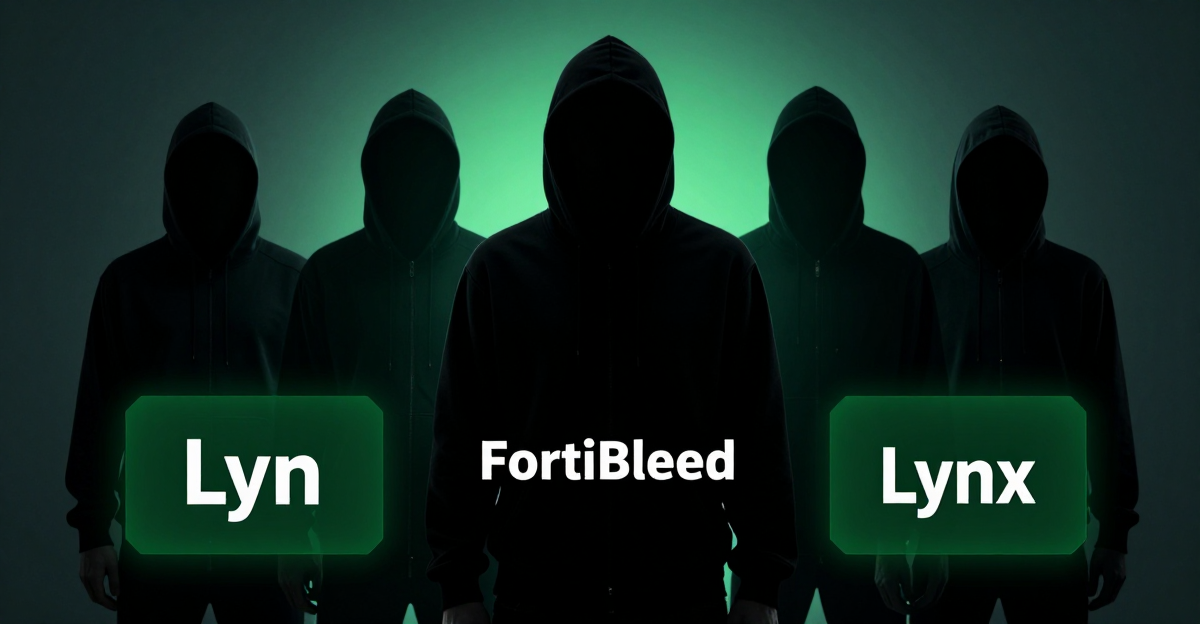
FortiBleed actors collaborated with INC and Lynx ransomware gangs to exploit Fortinet firewalls via a zero-day vulnerability in Nextcloud. Small-to-mid business owners risk significant data breaches and ransom demands if they fail to patch vulnerabilities and monitor network access.
The Short Answer
Small-to-mid-size businesses risk significant data breaches and ransom demands if they fail to patch vulnerabilities and monitor network access, as seen in the FortiBleed campaign where attackers exploited a zero-day vulnerability in Nextcloud and collaborated with INC and Lynx ransomware gangs. The attack led to credential theft incidents across multiple regions, including the United States, Europe, and the Middle East, highlighting the need for immediate firmware updates and strict access controls. A local bakery’s IT system was compromised, resulting in a 48-hour outage and an estimated $10k loss in sales, underscoring the financial impact of such breaches. Businesses should prioritize secure firewall management, conduct regular audits, and implement multi-layer defense strategies to mitigate similar threats. Incident response support is covered on our local cybersecurity pages for Atlanta and Dallas.
FortiBleed Actors Collaborating With Inc, Lynx Ransomware Gangs
What Happened
On July 2, 2026, the FortiBleed campaign was reported to infiltrate thousands of Fortinet firewalls worldwide. Attackers gained access by exploiting a zero‑day vulnerability in the Nextcloud platform and subsequently monetized the stolen credentials through coordinated actions with the INC and Lynx ransomware groups. The first confirmed impact was a surge in credential theft incidents across multiple regions, including the United States, Europe, and the Middle East. Rob Wright’s analysis on DarkReading identified the attackers’ strategic approach to leveraging compromised firewall access for future intrusions Rob Wright.What We Know
The FortiBleed credential theft campaign has been linked to both INC and Lynx ransomware operations, suggesting that the stolen Fortinet credentials were intended for follow‑on network intrusions. This collaboration indicates a multi‑stage attack where attackers first acquire access through the compromised firewall, then exploit a zero‑day bug in Nextcloud to extend their reach. The campaign utilizes basic social engineering tactics across diverse regions, from the US to Europe and the Middle East. Lawrence Abrams reports that the attack vectors include phishing emails and malicious links designed to lure small businesses into exposing credentials Lawrence Abrams.Why This Matters for Your Business
Small‑to‑mid‑size enterprises are particularly vulnerable because they often lack robust firewall configurations and may rely on third‑party services like Nextcloud. The theft of Fortinet credentials can lead to unauthorized access to critical systems, potentially compromising confidential data and operational processes. Regulatory fines may also arise from breaches of GDPR or HIPAA standards. For example, a local bakery’s IT system was compromised after the attackers accessed its Fortinet firewall, resulting in a 48‑hour outage and an estimated loss of $10 k in sales during the blackout. The incident illustrates how a single credential theft can cascade into broader business disruptions. This scenario underscores that SMBs must prioritize secure firewall management and adopt proactive threat detection strategies to mitigate such attacks.What You Should Do Right Now
- Immediate Review: Within 24 hours, verify all Fortinet firewall configurations and update firmware to the latest security patch. If a zero‑day vulnerability is identified, apply the recommended fix immediately.
- Weekly Action: Conduct a full audit of your Nextcloud installations for any known zero‑day vulnerabilities and enforce strict access controls. Use a free security scan to identify potential gaps [free-security-scan].
- 30‑Day Planning: Implement a multi‑layer defense strategy, including endpoint security, network segmentation, and threat intelligence feeds. Engage with vendors that specialize in firewall management and ransomware mitigation.
The Bigger Picture
The FortiBleed incident reflects a growing trend of attackers exploiting zero‑day vulnerabilities across popular cloud platforms. Coordinated attacks between credential theft and ransomware groups indicate an evolving threat landscape where attackers aim to maximize revenue by combining multiple attack vectors. SMBs are increasingly targeted due to their reliance on third‑party services and limited internal security resources. Monitoring these trends can help businesses anticipate similar threats and prepare more robust defenses.Key Takeaways
- Secure Fortinet Firewalls: Immediately patch any discovered vulnerabilities to prevent credential theft.
- Use Free Security Scans: Employ [free-security-scan] to quickly assess potential gaps in your infrastructure.
- Prioritize Endpoint Security: Implement strong endpoint protection to block unauthorized access attempts.
Frequently Asked Questions
Q: How can I verify if my Fortinet firewall is compromised? A: Check the firewall logs for unusual authentication requests or repeated failed login attempts. Compare these logs against baseline activity patterns and alert any anomalies. If you suspect a breach, immediately disable the affected firewall or apply the latest firmware patch. Q: What cost can a ransomware attack impose on my business? A 48‑hour outage in a local bakery resulted in $10 k loss, illustrating the financial impact. Q: How should I prevent future credential theft? A: Deploy multi‑factor authentication on all firewall interfaces, enforce strict access controls for third‑party services like Nextcloud, and regularly update firmware to mitigate zero‑day vulnerabilities. Q: Who is most likely targeted by these attacks? A: SMBs and mid‑size businesses that rely on third‑party cloud services and lack dedicated security teams are prime targets. The attackers exploit known weaknesses in popular platforms, making them vulnerable to credential theft and ransomware.How Defend My Business Can Help
Defend My Business offers a network of over 400 vetted technology providers tailored to your business size and risk profile. Our platform matches businesses with pre‑validated vendors specializing in firewall management, endpoint security, and ransomware mitigation. For this specific threat, we recommend partnering with vendors that excel in Fortinet firewall solutions and cloud service security. Use [free-security-scan] for a quick assessment of your current infrastructure and consult our contact page at https://defendmybusiness.com/contact to schedule a personalized advisory session.Sources
Tags: security, cloud services, cybersecurity, business risk, DefendMyBusinessRun a Free Security Scan
See exactly where your business is exposed to threats like the one in this article. Plain-English report, no credit card, no sales calls.
Want help getting your ransomware defense right?
Defend My Business helps SMBs cut through the marketing and get their ransomware defense right for their environment, budget, and compliance needs — then deploy and manage it. Through our 400+ vendor network we can often secure better pricing and terms than buying direct, and we stay vendor-neutral, so the recommendation fits you, not a sales quota. Want a second opinion? Pair this with our backup & disaster recovery or talk it through with an advisor.
Book a free call with a DMB advisor →